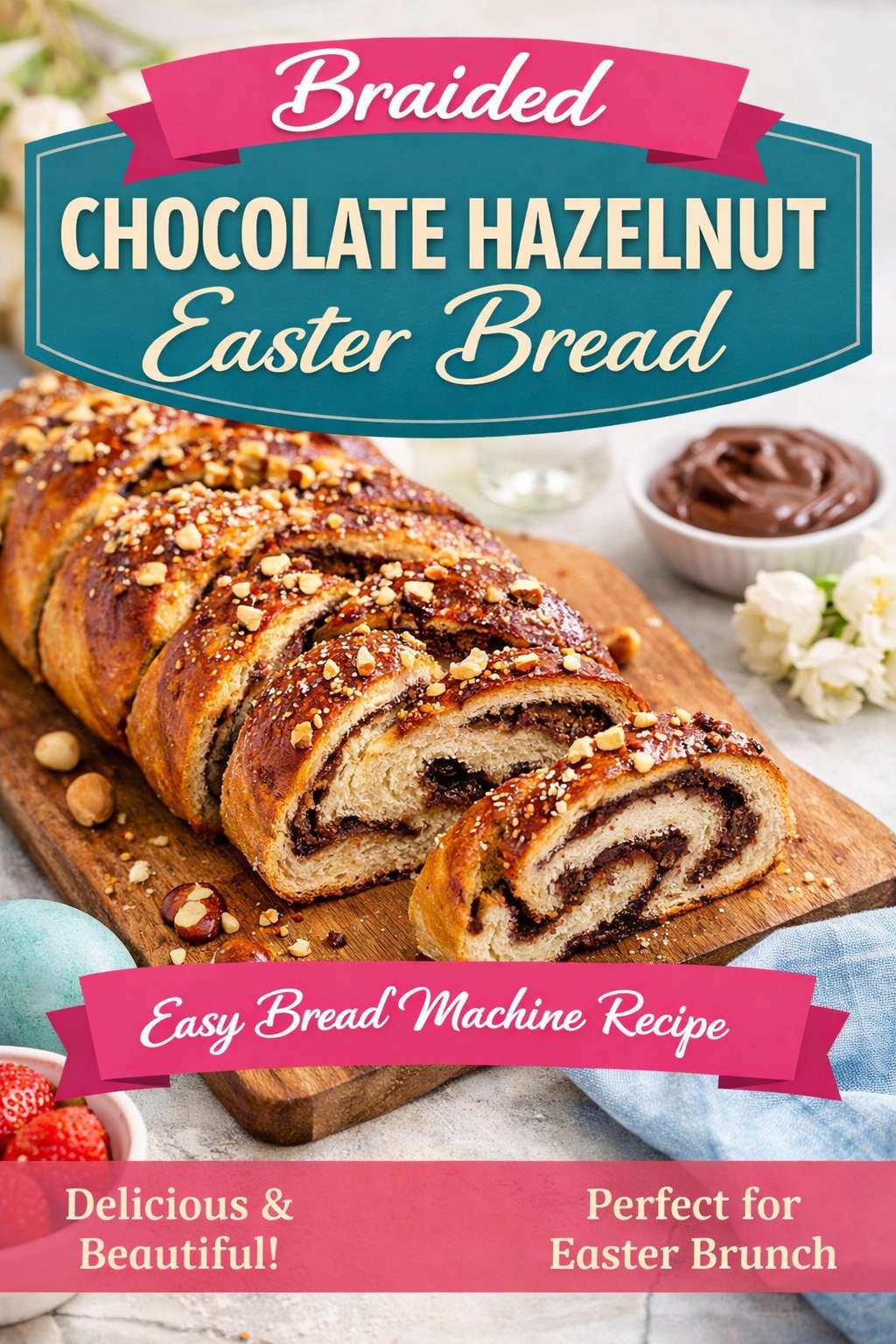
 Every Easter morning, before the house is properly awake, I like to sneak into the kitchen and start this braided chocolate hazelnut bread. There’s something about the smell of sweet dough, vanilla, and warm butter that makes the whole day feel special before it has even begun.
When my kids were little, they would stand in front of the oven waiting for the loaves to puff up and turn golden. Now they’re teens, so apparently they are far too grown up for that sort of excitement — and yet somehow they still wander into the kitchen the moment this bread comes out.
This is one of those Easter recipes that looks much fancier than it really is. The bread machine does the hard work of mixing and kneading, and all you need to do is shape, fill, braid, and bake. The end result is a soft, rich bread with lovely ribbons of chocolate hazelnut running through every slice. It feels festive enough for Easter brunch, but it’s also the kind of loaf you’ll happily nibble with coffee while standing at the kitchen bench in your pajamas.
Why This Bread Is Perfect for Easter
There’s something timeless about baking a special bread for Easter. Whether it’s braided, ring-shaped, sweetened, or filled, Easter bread has always had that lovely celebratory feel to it. This version keeps the traditional braided look but adds a chocolate hazelnut filling that makes it feel a little more indulgent and a lot more irresistible.
I also love that this recipe makes two loaves, which is ideal at Easter. One loaf can go straight onto the brunch table, and the second can be wrapped in parchment and twine for gifting. If you’ve ever turned up somewhere with a homemade loaf instead of a supermarket box of chocolates, you already know it makes you look wildly organised and far more put together than you probably feel.
Ingredients for Two Braided Loaves
- 2 large eggs
- 1 large egg, separated
- 1 cup lukewarm whole milk
- ¾ cup granulated sugar
- 2 teaspoons vanilla extract
- 1 ½ tablespoons active dry yeast
- 4 cups all-purpose flour, divided
- 1 teaspoon salt
- ½ cup unsalted butter, melted and cooled slightly
- ½ cup chocolate hazelnut spread
- 2 tablespoons milk, for the egg wash
- ¼ cup chopped hazelnuts
- 1 tablespoon sugar, for topping
A Quick Note Before You Start
For the dough, you’ll use 2 whole eggs plus 1 egg white. The extra yolk gets saved for the egg wash.
The flour is divided on purpose. Start with 3 cups, then add the remaining flour gradually if needed while the dough is mixing. Bread dough can vary a bit depending on humidity, egg size, and even how generously that flour was scooped. You want the dough soft and slightly tacky, not sticky like cake batter and not dry like playdough.
How to Make It in the Bread Machine
1. Add the Dough Ingredients to the Bread Machine
Place the following into your bread machine pan in the order recommended by your machine manufacturer:
- 2 whole eggs
- 1 egg white
- lukewarm milk
- sugar
- vanilla extract
- 3 cups of the flour
- salt
- yeast
Start the dough cycle. Once the ingredients begin mixing and a rough dough forms, drizzle in the melted butter.
Keep an eye on the dough during the first few minutes of kneading. Add some or all of the remaining 1 cup of flour, a little at a time, until the dough becomes smooth, soft, and just slightly tacky. You may not need every bit of it.
Let the machine complete the full dough cycle, including the first rise.
2. Divide the Dough
When the dough cycle is finished, turn the dough out onto a lightly floured surface. Divide it into 2 equal portions.
Take one portion and divide it again into 3 equal pieces. Repeat with the second half so you have 6 pieces altogether.
3. Fill and Roll the Ropes
Working with one piece at a time, roll it into a rectangle around 10 to 12 inches long. Spread a thin strip of chocolate hazelnut spread down the centre, then roll it up lengthwise into a rope. Pinch the seam closed as best you can.
Repeat until all 6 pieces are filled and rolled.
Try not to overfill them here. I know the temptation is real, but too much filling will ooze everywhere and turn your pretty Easter braid into a chocolatey wrestling match.
4. Braid the Loaves
Take 3 ropes and braid them together, pinching the ends to seal and tucking them slightly underneath. Place the braid onto a lined baking tray or into a greased loaf pan if you prefer a neater, more contained loaf shape.
Repeat with the remaining 3 ropes to make the second loaf.
5. Proof the Loaves
Cover the loaves loosely with a clean tea towel or lightly greased plastic wrap and let them rise in a warm spot for 30 to 45 minutes, or until puffy.
While they are rising, preheat your oven to 350°F / 175°C.
6. Add the Egg Wash and Topping
Whisk the reserved egg yolk with the 2 tablespoons of milk. Brush this gently over the loaves, then sprinkle with chopped hazelnuts and a little sugar.
7. Bake
Bake the loaves for 28 to 35 minutes, or until they are deep golden brown.
If the tops start browning too quickly, loosely tent them with foil for the last part of baking.
Let the loaves cool on a wire rack before slicing. Cutting into hot bread is always tempting, but letting it cool a little helps the crumb set properly and keeps it from going gummy inside.
What the Dough Should Look Like
This is one of those recipes where the dough texture matters more than blindly following the flour measurement.
You’re aiming for dough that is:
- smooth and elastic
- soft to the touch
- slightly tacky but not sticky
- easy to handle after the dough cycle
If it looks wet and sloppy, add a little more flour. If it looks dry, stiff, or crumbly, it may have had too much.
Easter Serving Ideas
This bread is lovely served warm in thick slices with a little butter or extra chocolate hazelnut spread.
It also makes a beautiful Easter brunch centrepiece alongside fruit, coffee, and a few simple cheeses.
If you want to dress it up for dessert, lightly toast a slice and serve it with whipped cream, mascarpone, or a scoop of vanilla ice cream. Not exactly subtle, but very effective.
And of course, one loaf wrapped in parchment and tied with ribbon makes a gorgeous Easter gift.
Easy Variations
Orange Chocolate Hazelnut Bread
Add the finely grated zest of one orange to the dough for a fresh citrus lift.
Cinnamon Swirl Version
Swap the hazelnut spread for softened butter, brown sugar, and cinnamon.
Coconut Chocolate Braid
Sprinkle a little shredded coconut over the filling before rolling up each rope.
Mini Braided Easter Buns
Use the same dough to make smaller individual braids for Easter baskets or brunch place settings.
Bread Machine Tips for Best Results
Use the dough cycle only for this recipe. The bread machine is doing the mixing, kneading, and first rise, but the shaping and baking are better done in the oven.
Check the dough during the first knead. This is the best time to adjust flour if needed.
Make sure your milk is warm, not hot. Too much heat can upset the yeast and leave you with a sad, stubborn dough that refuses to rise.
Don’t skip the second rise after shaping. That extra proof is what helps give the loaves their soft, fluffy texture.
If your kitchen is cool, place the shaped loaves somewhere cosy to rise. Near a sunny window or in a switched-off oven with the light on usually works well.
How to Store It
Keep the bread covered at room temperature for up to 2 days.
Store it in the fridge for up to 5 days if you want it to last a little longer. Warm slices before serving for the best texture.
You can also freeze it. Wrap the loaf or individual slices well and freeze for up to 2 months. Thaw overnight or toast straight from frozen.
A Lovely Easter Bake to Repeat Every Year
There is something especially satisfying about using the bread machine for the messy part and still ending up with a homemade loaf that looks beautiful enough for a celebration. It feels like the best of both worlds — less fuss, less kneading, and still all the magic of a proper Easter bake.
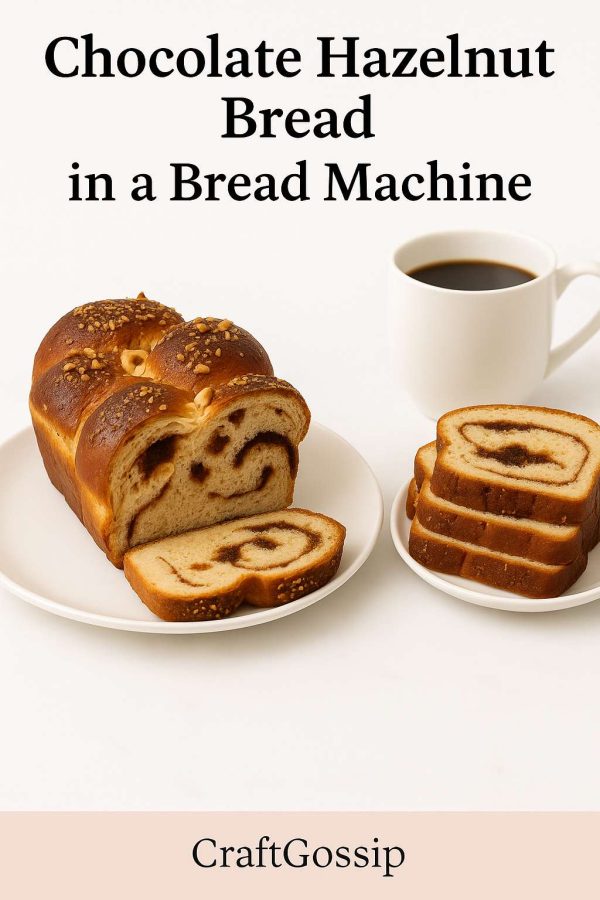
This braided chocolate hazelnut bread has that soft, rich texture that makes people tear off “just one more piece” until suddenly half the loaf has vanished. And honestly, that is usually the sign of a recipe worth keeping.




The ingredients list has 4 cups flour.
The instructions only mention 3 cups.
Is the extra cup used to adjust the dough, or in rolling?
HI, thanks for pointing out my error, I have updated the article.