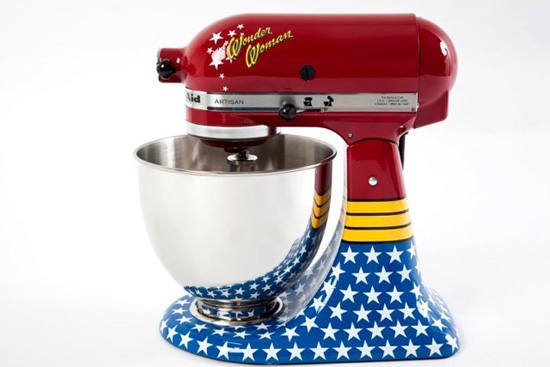
 I’m in the market for a new KitchenAid, and I have fond childhood memories of watching Lynda Carter as Wonder Woman (I always wanted a pair of Wonder Woman Underoos and sadly never got them, sigh), so this may just be the mixer for me. Though to be fair, I would also have to see a Dukes of Hazard, Falcon Crest and Family Ties version. Find the Wonder Woman KitchenAid Stand Mixer
 HERE, part of the Coleção “My KitchenAid” series by KitchenAid Brasil. Spotted on Foodiggity.
Comments
Have you read?
Ghost Poop Marshmallow Bags With a Free Printable Halloween Topper
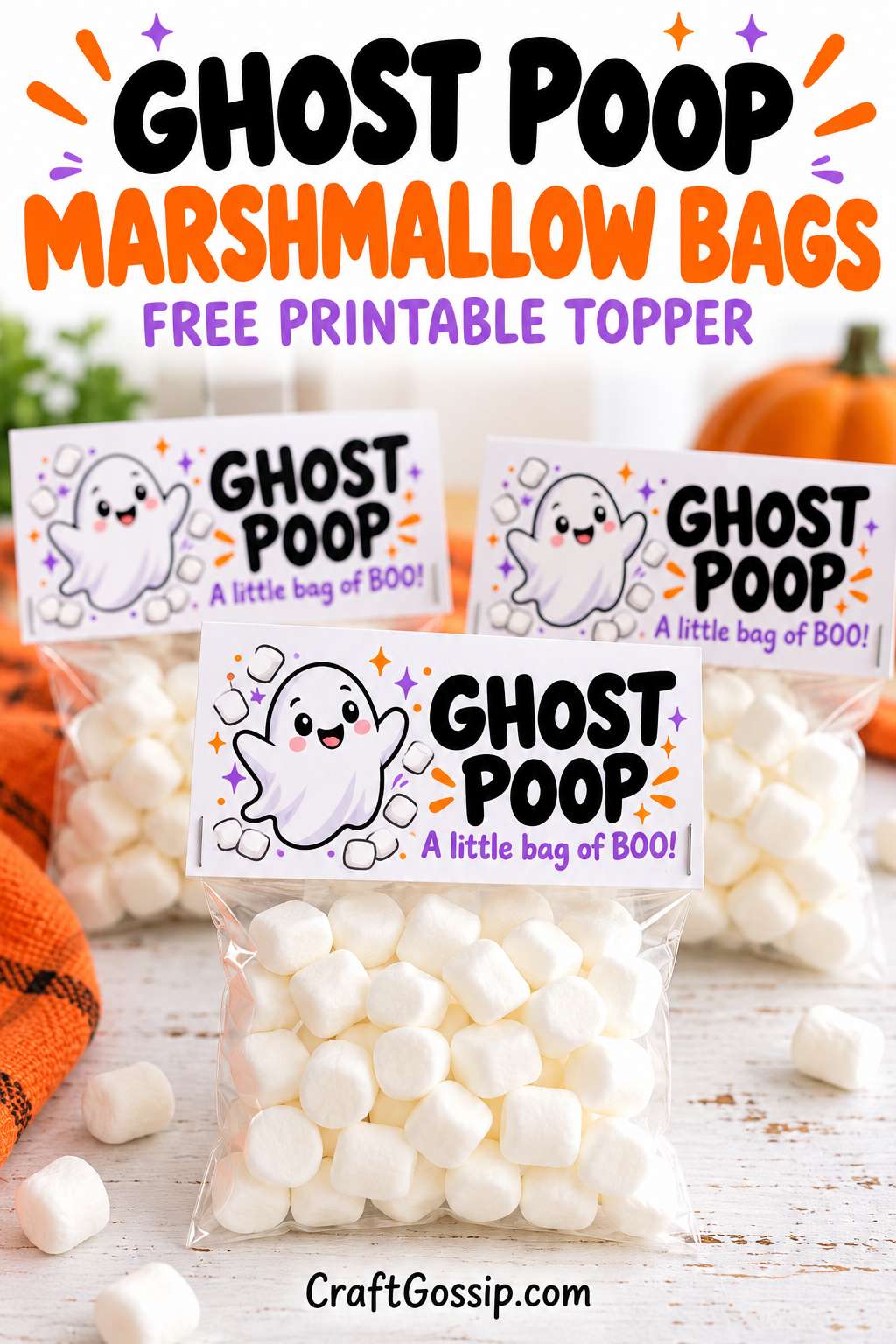
If there is one thing that gets children giggling, it is giving an ordinary snack a slightly silly name. These “Ghost Poop” marshmallow bags turn a handful of white mini marshmallows into a funny little Halloween gift, with a smiling ghost topper to finish them off.
There is no baking, icing or fiddly decorating involved. Simply fill small clear bags with mini marshmallows, seal them and attach the free printable topper. It is the sort of project you can put together at the kitchen table while the kettle boils, especially if you print and cut the toppers beforehand.
The design features a friendly ghost, little marshmallow illustrations and orange and purple accents, with the wording “Ghost Poop — A little bag of BOO!” It is cheerful rather than spooky, making it a fun choice for family Halloween gatherings, party favours or little gifts for the grandchildren.
I also like that you can make as many or as few as you need. A packet of mini marshmallows, some treat bags and a sheet of cardstock are enough to get started. There is no need to buy a long list of ingredients or spend an afternoon making individual decorations.
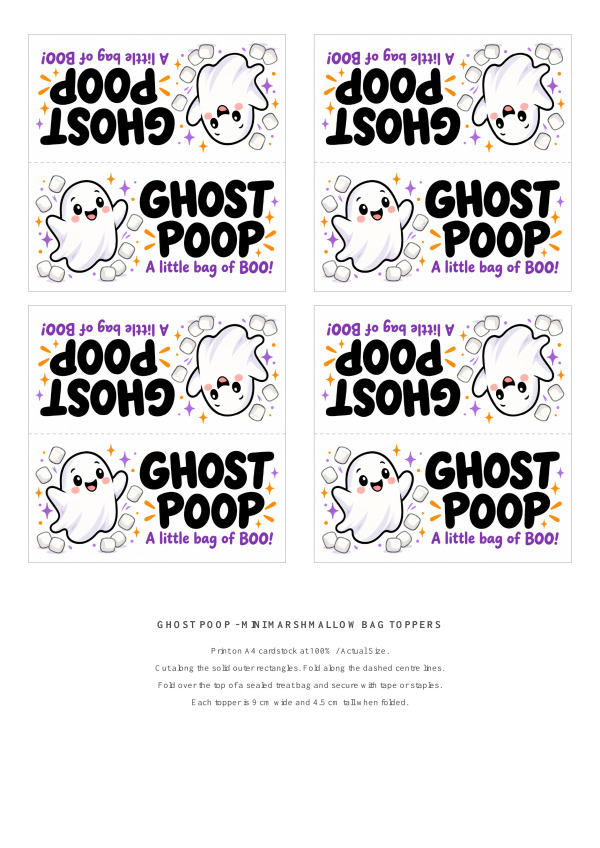
Our free printable includes four fold-over bag toppers on one A4 sheet, with the design printed on both the front and back.
What You’ll Need
- White mini marshmallows
- Clear food-safe treat bags, approximately 8–9 cm wide
- A4 white cardstock suitable for your printer
- Colour printer
- Scissors or a paper trimmer
- Double-sided tape or a stapler
Small resealable food bags are especially handy because you can close the bag before attaching the decorative topper. If you are using open-ended cellophane bags, secure the opening first with a suitable closure or fold and tape it shut.
Choose white mini marshmallows for the classic ghost-themed look. Their little rounded shapes are all the decoration the contents need.
Download the Free Ghost Poop Printable
Choose the format that works best for you:
Each sheet contains four toppers. The unfolded pieces measure 9 × 9 cm, and each finished topper measures 9 cm wide and 4.5 cm tall.
Print on A4 paper at 100% or Actual Size. Turn off “Fit to Page” if it changes the scale, so the toppers stay the intended size.
You will notice that one half of each topper appears upside down on the sheet. That is intentional: once folded over the bag, the design will be the right way up on both sides.
How to Make Ghost Poop Marshmallow Bags
1. Print the toppers
Print the sheet onto white cardstock using your printer’s colour setting.
Cardstock gives the finished topper a neat, sturdy shape. Ordinary printer paper can also be used, although it will feel softer and may crease more easily.
Let the ink dry before handling or folding the sheet.
2. Cut out each rectangle
Cut along the solid outer lines to separate the four toppers.
Keep both printed halves joined together. The dashed line through the middle marks the fold, rather than a cutting line.
A paper trimmer makes this step quick when you are preparing a whole batch, but scissors work perfectly well.
3. Fold the toppers
Fold each rectangle along the dashed centre line, with the printed sides facing outwards.
Line up the edges and press the fold firmly. You can use the back of a spoon or a bone folder to make a crisp crease.
Set the folded toppers aside while you fill the bags.
4. Fill the bags with mini marshmallows
Add a small handful of white mini marshmallows to each clear food-safe bag.
Leave enough empty space at the top to close the bag and attach the topper. Avoid packing the marshmallows right up to the opening, as that makes the finished bags harder to assemble neatly.
For a consistent batch, use the same small scoop or measuring cup to portion the marshmallows into each bag. The amount you need will depend on your bag size and how full you want the favours to look.
5. Seal the bags
Close each bag securely before adding the cardstock.
For resealable bags, press the closure all the way across. For open-ended treat bags, fold and secure the opening so the marshmallows stay enclosed.
The printable topper decorates the sealed bag; it does not need to act as the food packaging closure.
6. Attach the ghost topper
Slip the folded topper over the closed top of the bag, with one printed panel on each side.
Secure it with double-sided tape between the cardstock and the outside of the bag. Alternatively, place a staple near each end of the topper, through the empty section above the marshmallows.
Check that the wording is facing forward and the topper sits evenly across the bag.
That is your little bag of ghost poop ready to gift!
Tips for Making a Whole Batch
If you are preparing these for a party, work through one stage at a time. Print all the sheets, cut all the toppers, fold them, then fill and seal the bags.
Four toppers fit on each sheet, so three sheets will make twelve favours and five sheets will make twenty.
A clean, dry scoop makes filling the bags easier. You can also line the finished bags up in a shallow tray or basket so they stay tidy until you are ready to hand them out.
For children helping with the project, filling the bags and matching them with the ghost toppers are simple jobs. An adult can handle cutting and stapling.
Can You Make These Ahead of Time?
The paper toppers can be printed, cut and folded well ahead of your Halloween celebration.
Once the marshmallow bags are assembled, keep them sealed in a cool, dry place away from direct sunlight. Follow the storage guidance on the marshmallow packet and avoid leaving open bags exposed to air.
If you are making these for a group, keep the original packaging so you have the ingredient and allergen information available. Check any school or venue food requirements before bringing homemade favour bags.
Fun Ways to Gift Your Ghost Poop Bags
These little treats are an easy addition to a Halloween party table. Place one at each setting, tuck them into party bags or arrange them in a basket beside the door for invited guests.
You could also add one to a Halloween care package or a small BOO basket. Write the recipient’s name on the back of the topper for a personal touch.
For a family movie night, put a marshmallow bag beside each person’s snack bowl. It is a small detail, but the funny label makes an everyday treat feel part of the celebration.
If you enjoy making inexpensive seasonal gifts, this is a handy printable to keep with your Halloween craft supplies. A few white mini marshmallows and a smiling ghost are enough to create a little gift that is quick to assemble and almost guaranteed to raise a giggle.
This is awesome!!!
LOL! How fun!
I love !!!
Oh man, I want that!
Love, love, LOVE it.
Oh, I HAD the Wonder Woman Underoos!
Now I NEED the mixer! 🙂