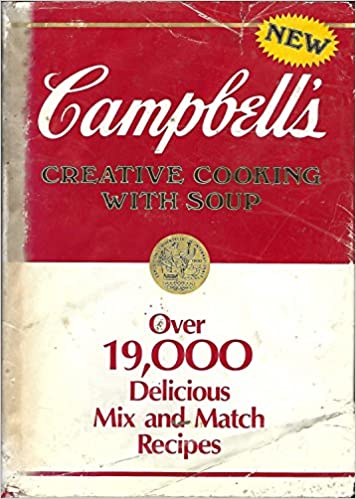
Some cookbooks look lovely on a shelf. Others look as though they’ve spent years beside the stove, collecting handwritten notes, folded corners and the occasional splash of dinner. Campbell’s Creative Cooking With Soup belongs to that wonderfully practical tradition.
This is the kind of cookbook you can imagine being handed from one household to another, along with a favorite casserole dish and a few words about which meals the family liked best. Its familiar red-and-cream cover has plenty of nostalgic appeal, but the idea behind it is still useful: take a pantry staple and turn it into something more.
When I first came across this book, I wished I’d had it during lockdown and isolation. We kept canned hearty soups in the cupboard just in case, and quite a few of our vegetables came from cans during those months. Having more ideas for using those ingredients would have been very welcome.
You can look for Campbell’s Creative Cooking With Soup on Amazon.
What Does “Over 19,000 Mix and Match Recipes” Mean?
The cover’s promise of more than 19,000 delicious mix-and-match recipes certainly catches your attention. That’s quite a lot of dinner inspiration for one cookbook.
The important part is mix and match. The book uses recipe variation charts to help readers change ingredients to suit their needs and tastes. Think of the headline figure as possible combinations and variations, rather than 19,000 separately written recipes.
That flexible approach is part of the appeal. Instead of treating every recipe as an entirely separate shopping expedition, you have a starting point and different ways to adapt it.
For anyone who likes cooking from what’s already in the cupboard, that’s a useful way to think about meals.
Why Cooking With Canned Soup Still Appeals
Canned soup can do more than fill a bowl at lunchtime. In suitable recipes, it can contribute flavor, moisture and a ready-made sauce base.
Condensed soups are especially associated with the comforting casseroles and baked dishes many of us remember from family dinners. There’s something familiar about a meal that comes out of the oven bubbling around the edges, ready to be spooned onto plates.
Convenience is part of the attraction, too. A pantry ingredient can reduce the number of steps involved in preparing dinner, which matters on an ordinary busy evening.
It isn’t necessary to turn every meal into a project. Sometimes getting something warm and satisfying onto the table is quite enough.
A Cookbook for Pantry-Minded Cooks
What I like about this style of cooking is its practicality. It encourages you to look at familiar ingredients with a little more imagination.
A cupboard containing canned soup, vegetables and a few other staples can feel rather repetitive if you always use them in the same way. A cookbook built around variations offers a different starting point.
It also suits cooks who prefer an actual book beside them. You can browse, mark a page and return to it later without trying to remember which of your seventeen open tabs contained dinner.
If you enjoy vintage kitchen finds, this is also the sort of title worth watching for at charity shops, secondhand bookshops and garage sales. A well-used copy can have plenty of character, provided its pages are complete and readable.
Using Vintage Recipes in a Modern Kitchen
Older cookbooks sometimes refer to products, package sizes or ingredients that have changed over time.
Before starting a recipe, check the type of soup it specifies. Condensed soup and ready-to-eat soup aren’t automatically interchangeable. Their concentration and liquid content differ, which can affect the finished dish.
Check can sizes as well. If your available product differs from the amount listed, account for that difference rather than assuming one can always means the same quantity.
For Australian readers, some American product names may be unfamiliar. Compare the actual ingredients and product type before choosing a substitute.
It’s also worth following a recipe as written the first time when possible. Once you understand the intended result, you’ll be better placed to decide which changes suit your household.
What to Check Before Buying a Copy
Several editions of Campbell’s Creative Cooking With Soup appear in book catalogs, with different mix-and-match claims on their covers.
If you want the red-and-cream edition pictured here, check the listing photographs and description carefully.
For a secondhand copy, look for:
- Clear photographs of the cover and interior.
- Confirmation that all pages are present.
- Notes about stains, writing or damage.
- The edition and publication details.
- The total cost, including delivery.
A few handwritten cooking notes wouldn’t put me off. Missing recipe pages would be another matter.
A Lovely Gift for a Vintage Cookbook Collector
This book would make a thoughtful addition to a small kitchen-themed gift. Pair it with a wooden spoon, a cotton tea towel or a secondhand casserole dish for a practical present with a nostalgic feel.
It could also appeal to someone who enjoys collecting vintage advertising and branded cookbooks. The familiar Campbell’s design is very much part of its charm.
There’s something lovely about a cookbook that feels connected to everyday home cooking. It doesn’t need to promise a restaurant experience. It simply needs to offer useful ideas for feeding people.
If that sounds like your kind of book, browse Campbell’s Creative Cooking With Soup on Amazon and compare the available editions.
A pantry staple, a little inspiration and a cookbook with a bit of history can be a very pleasing combination. And if it helps answer the nightly “What’s for dinner?” question, it has already earned its place in the kitchen.