
If you’ve ever wondered how to make pizza dough at home without ending up with a crust that’s dense, bland, or weirdly tough, you are definitely not alone. Homemade pizza dough sounds simple — and technically it is — but there’s a big difference between dough that’s just “fine” and dough that makes everyone hover around the oven waiting for the next slice.
The good news is you do not need a fancy mixer, a wood-fired oven, or a pile of specialty ingredients to make really good pizza dough from scratch. You just need the right ratios, a little patience, and a few practical tricks that make the dough easier to work with.
This recipe is the one I’d hand to anyone wanting an easy homemade pizza dough recipe that actually delivers. It gives you a crust that’s crisp on the bottom, chewy through the middle, and nicely puffed around the edges. It also works whether you want pizza tonight or want to make the dough ahead for tomorrow.
And honestly, once you make your own dough a couple of times, those supermarket dough balls start looking a bit sad.
Why This Homemade Pizza Dough Works
A good pizza dough comes down to a few simple things: enough water for a soft dough, enough salt for flavor, enough time for the gluten to develop, and the right bake for color and crispness. Flour proteins form gluten once hydrated, and that gluten network is what helps dough stretch, trap gas, and bake into a chewy crust. Resting the dough helps that structure continue developing, which is one reason an overnight dough usually tastes even better.
This recipe is designed to be:
- easy enough for beginners
- reliable with plain all-purpose flour
- flexible for same-day or overnight pizza
- flavorful, not flat and boring
- chewy without being heavy
Best Flour for Pizza Dough at Home
You can absolutely make excellent pizza dough with all-purpose flour. That is still the best starting point for most home bakers. If you want a slightly chewier crust with a bit more structure, bread flour is a great swap.
The reason flour choice matters is protein. When flour is mixed with water, gluten forms, and that network gives dough its stretch and strength. Higher-protein flours usually create a chewier, more structured crust, while moderate-protein flours are often easier for beginners to handle.
Ingredients for Homemade Pizza Dough
Makes 2 medium pizzas or 1 large tray pizza
- 500g all-purpose flour, plus extra for dusting
- 325ml warm water
- 7g instant yeast
- 10g fine sea salt
- 1 tablespoon honey or sugar
- 2 tablespoons olive oil
Optional for extra flavor
- 1 teaspoon garlic powder
- 1 teaspoon dried Italian herbs
How to Make Pizza Dough at Home
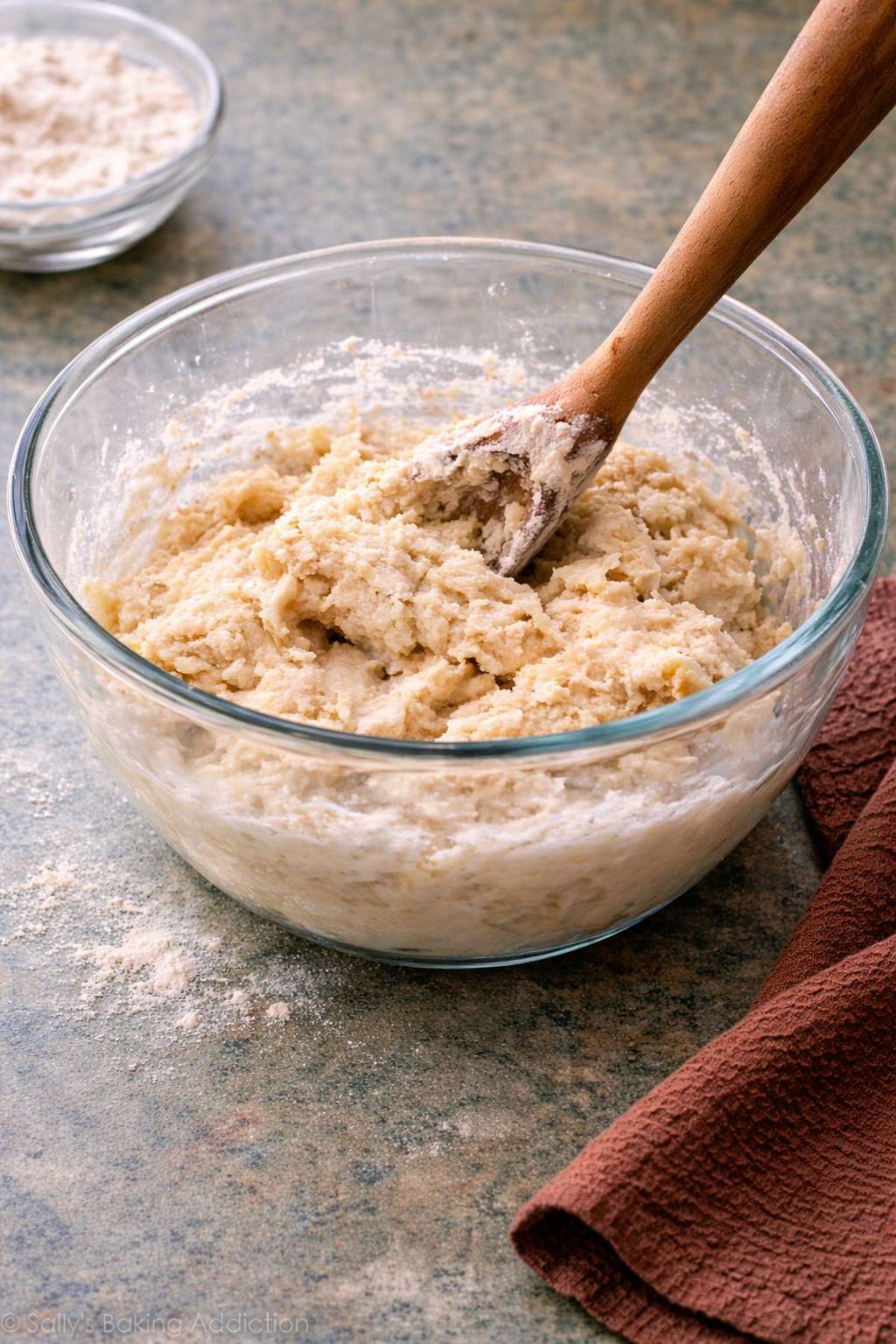
1. Mix the dough
In a large bowl, combine the warm water, yeast, and honey or sugar. Leave it for 5 minutes until slightly foamy if you like to check the yeast first. If using instant yeast, you can also mix everything straight together.
Add the flour, salt, and olive oil. Stir until a shaggy dough forms.
2. Knead until smooth
Turn the dough onto a lightly floured surface and knead for 8 to 10 minutes until smooth and elastic. If you’re using a stand mixer, knead with the dough hook for about 4 to 5 minutes.
The dough should feel soft and slightly tacky, not dry and stiff. A softer dough is what gives you that lovely chewy interior later on. King Arthur’s pizza dough guidance also notes the dough should be soft and smooth, not overworked.
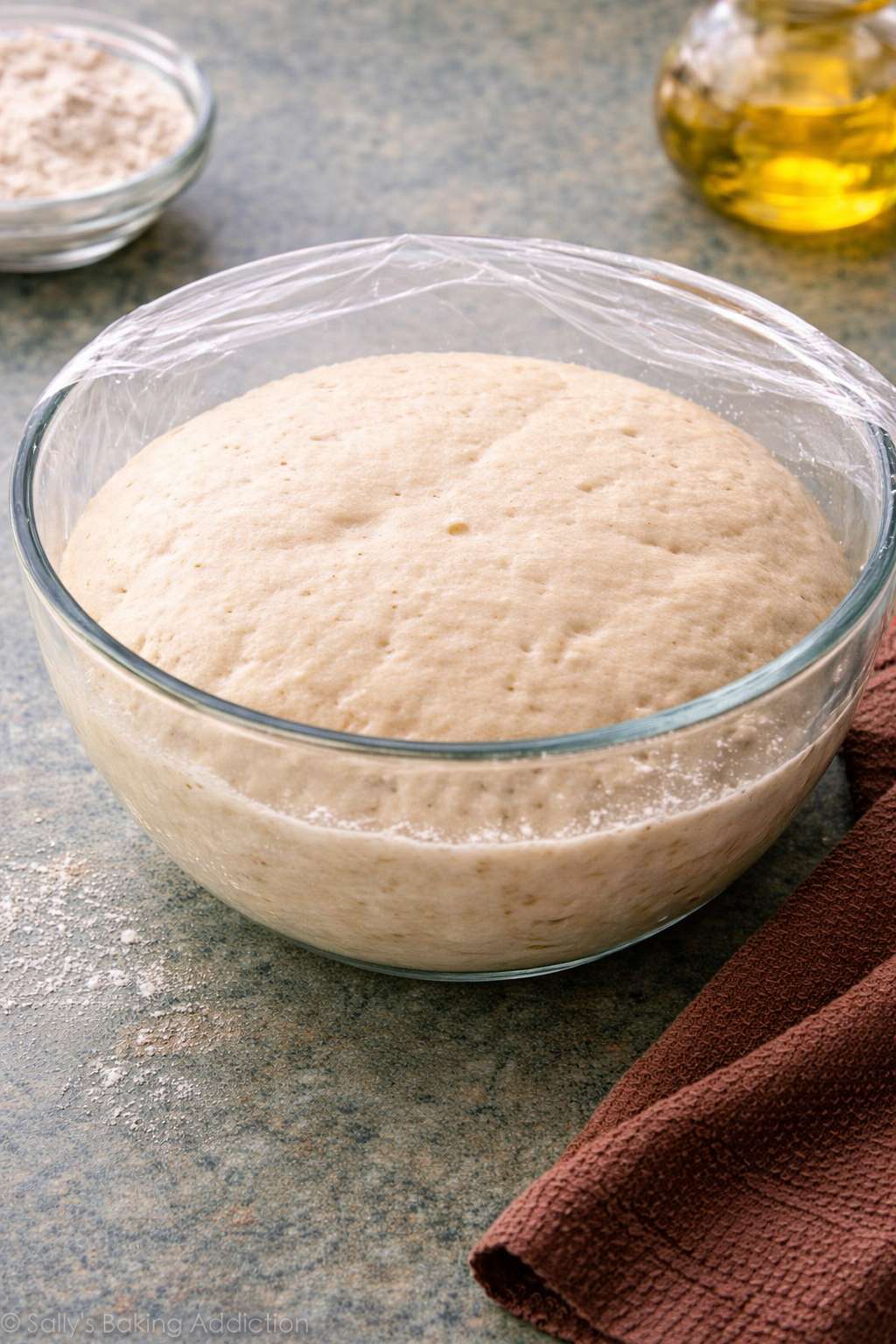
3. Let it rise
Place the dough in a lightly oiled bowl, cover, and let it rise in a warm spot for 1 to 1½ hours, or until doubled in size.
4. Divide and rest
Punch the dough down gently and divide it into 2 portions for medium pizzas. Shape each piece into a ball, cover, and rest for 15 to 20 minutes.
This little rest matters more than people think. It relaxes the dough so it stretches more easily without springing back and making you mutter under your breath at it.
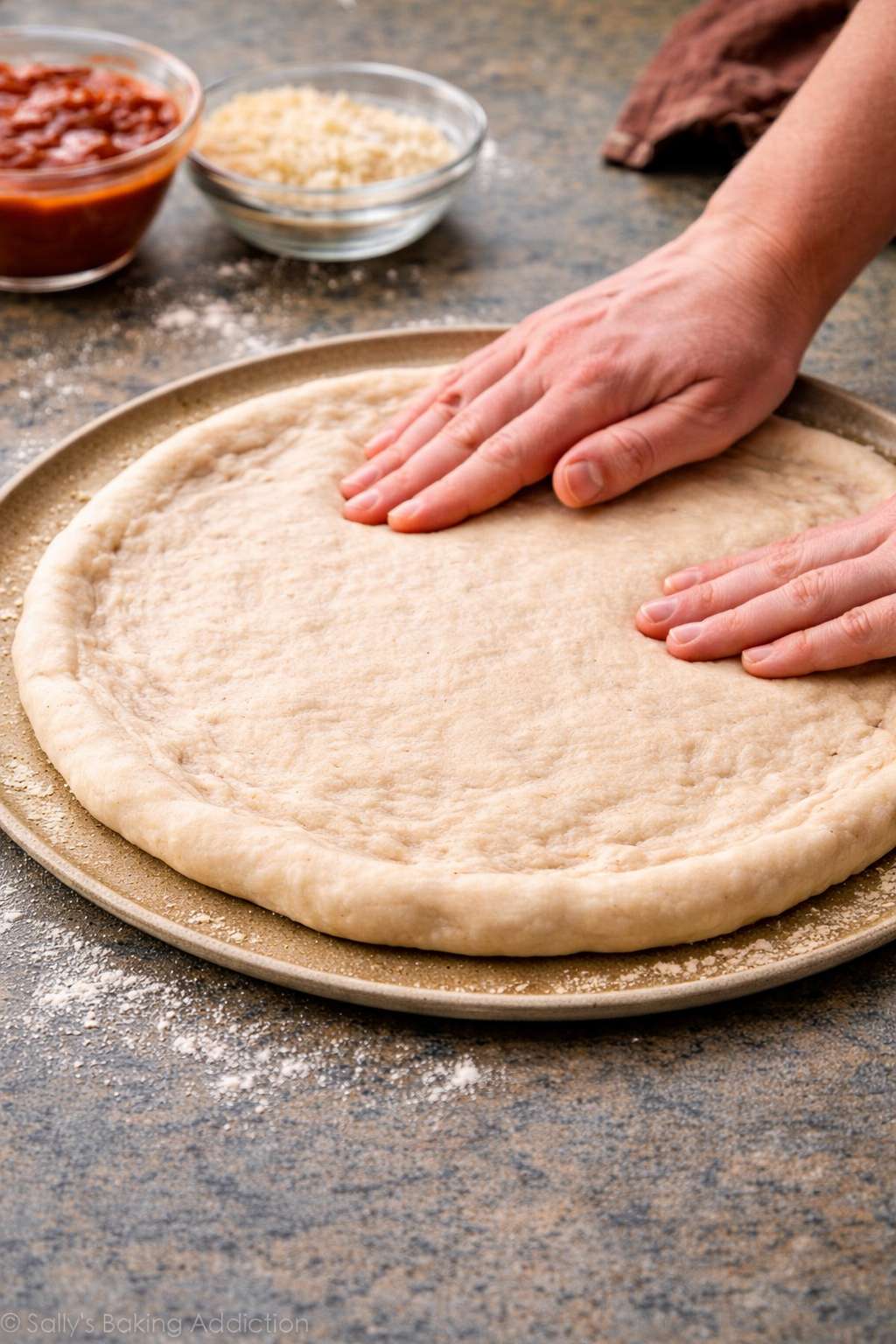
5. Shape the pizza bases
On a lightly floured bench or piece of baking paper, press one dough ball into a round. Use your fingertips to push from the centre outward, leaving a slightly thicker edge if you want that classic puffy crust.
Try not to squash all the air out of it. That trapped gas helps create the light edge and better texture.
6. Add toppings
Top with pizza sauce, cheese, and your favourite toppings. Keep it sensible. I know it’s tempting to throw the entire fridge on there, but overloaded pizza is one of the fastest ways to get a soggy middle.
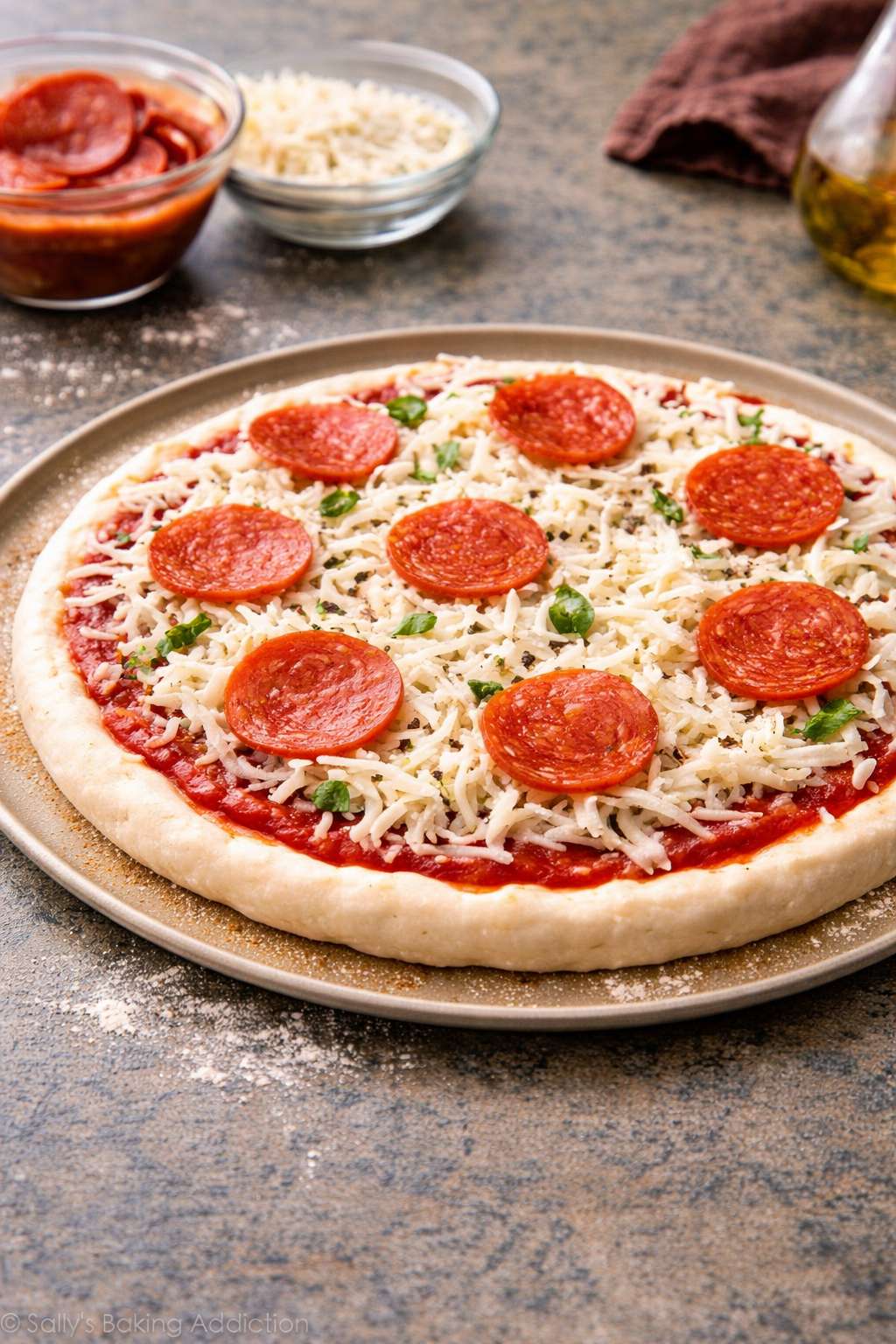
7. Bake hot
Bake in a very hot oven, ideally 250°C or as high as your oven will go, for 10 to 14 minutes.
For the best homemade pizza crust:
- preheat a pizza stone, pizza steel, or heavy baking tray
- bake on the lower-middle rack
- let the oven fully preheat for at least 30 minutes
A properly preheated surface helps the bottom crisp before the toppings have time to flood everything with moisture.
Same-Day Dough vs Overnight Dough
This is where homemade pizza starts getting really good.
Same-day pizza dough
Perfect when you want pizza tonight. Follow the recipe as written, let it rise, shape, top, and bake.
Overnight pizza dough
After kneading, place the dough in an oiled bowl, cover, and refrigerate for up to 24 hours. King Arthur specifically recommends chilled dough as a way to build more flavor and give you more schedule flexibility.
When you’re ready to use it, take it out 1 to 2 hours before shaping so it can warm slightly and relax.
Overnight dough usually gives you:
- better flavor
- better browning
- easier stretching
- a more airy crust
Tips for Crispy Homemade Pizza Crust
If your goal is crispy homemade pizza dough, these are the things that make the biggest difference:
Use a hot baking surface
A preheated pizza stone, steel, or upside-down tray helps crisp the base fast.
Don’t add too much sauce
Too much sauce makes the centre wet and heavy.
Go easy on watery toppings
Fresh tomatoes, mushrooms, and mozzarella can all release a lot of liquid. Pat them dry first.
Brush the edge lightly with olive oil
This helps the crust turn golden and adds flavor.
Bake hotter than you think
Pizza loves heat. Home ovens are limited, so crank it as high as you safely can.
Common Pizza Dough Mistakes
Dough is too sticky
That usually means it’s well hydrated, which is not a bad thing. Dust your hands lightly with flour, but do not keep adding big handfuls or you’ll make the dough heavy.
Dough keeps shrinking back
It needs to rest longer. Cover it and leave it alone for 10 to 15 minutes, then try again.
Dough tastes bland
Use enough salt, don’t skip the oil, and give it enough time to ferment. Longer resting builds flavor.
Crust is dense
This can happen if the dough is too dry, under-risen, or overloaded with toppings.
Bottom is pale and soft
Your oven or tray probably wasn’t hot enough before baking.
Homemade Pizza Dough Recipe Card
Ingredients
- 500g all-purpose flour
- 325ml warm water
- 7g instant yeast
- 10g fine sea salt
- 1 tablespoon honey or sugar
- 2 tablespoons olive oil
Method
- Mix warm water, yeast, and honey or sugar in a bowl.
- Add flour, salt, and olive oil. Stir into a shaggy dough.
- Knead 8 to 10 minutes until smooth and elastic.
- Place in an oiled bowl, cover, and rise 1 to 1½ hours.
- Divide into 2 dough balls and rest 15 to 20 minutes.
- Stretch into pizza bases.
- Add toppings.
- Bake at 250°C for 10 to 14 minutes on a preheated tray, stone, or steel.
How to Store Pizza Dough
In the fridge
Store covered for up to 24 hours after the first knead, or after the first rise.
In the freezer
Lightly oil the dough ball, place it in a freezer bag, and freeze for up to 3 months. Thaw overnight in the fridge, then let it sit at room temperature for about 1 hour before shaping.
FAQ: Making Pizza Dough at Home
Can I make pizza dough without a mixer?
Yes, absolutely. A bowl, your hands, and a bench scraper are enough.
Is bread flour better than all-purpose flour for pizza dough?
Bread flour gives a slightly chewier crust, but all-purpose flour is easier and still works beautifully.
Can I make pizza dough ahead of time?
Yes. In fact, overnight dough often has better flavor and texture.
Why is my pizza dough tough?
Usually because too much extra flour was added, the dough was too dry, or it was rolled too aggressively.
How thin should I stretch pizza dough?
That depends on the style you like, but for a classic homemade pizza, aim for a thin centre with a slightly thicker rim.
The Real Secret to Better Homemade Pizza
The biggest upgrade is not a gadget. It’s confidence.
Once you stop worrying about making the dough look perfect, pizza night gets much easier. Dough is meant to be handled. It is meant to puff a bit unevenly, stretch a bit wonky, and occasionally turn into a shape that is definitely not a circle. That’s part of the charm.
And frankly, a slightly lopsided homemade pizza still tastes better than a disappointing takeaway.