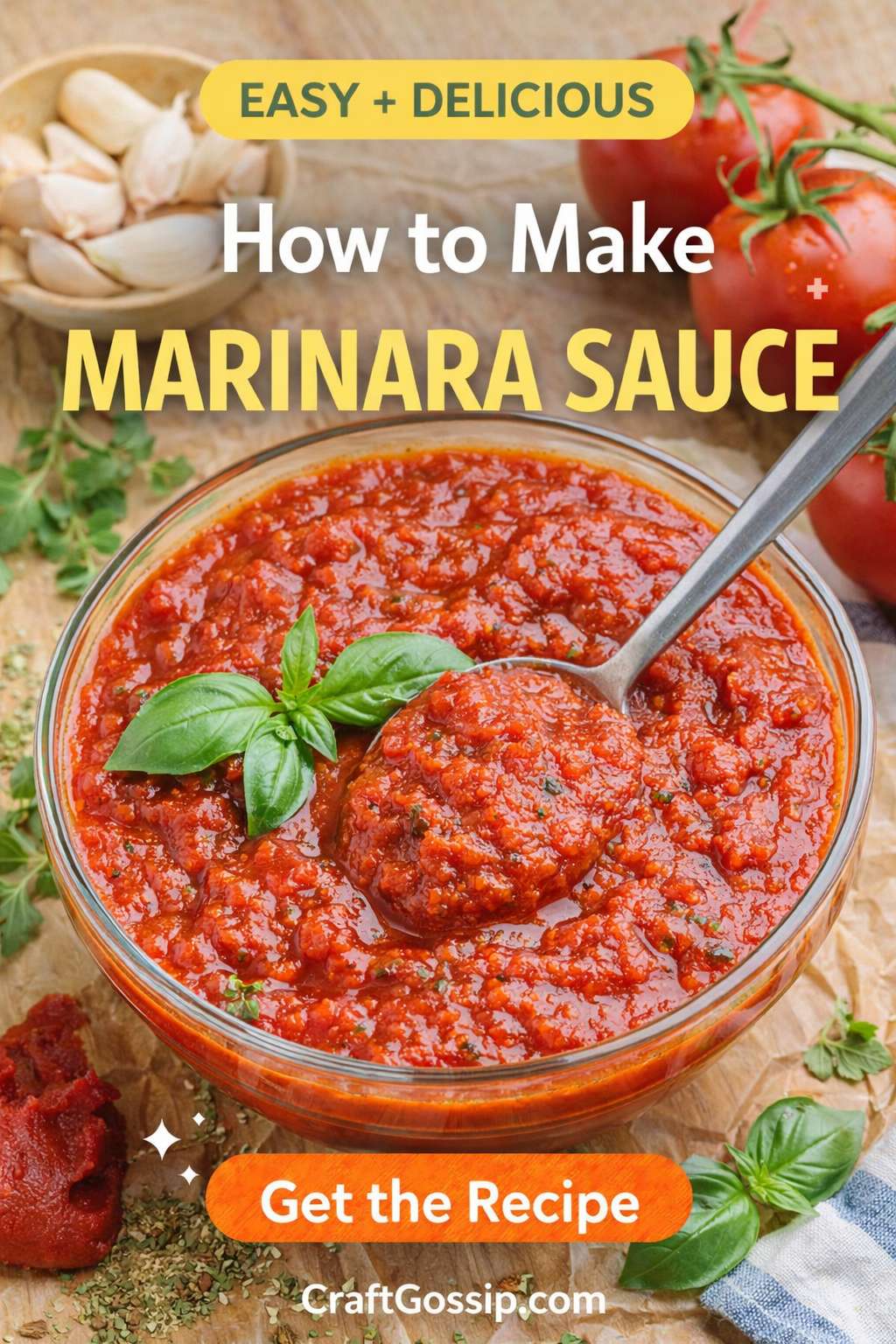
If you have ever wanted to know how to make marinara sauce from scratch, this is one of those kitchen basics that is absolutely worth learning. A good homemade marinara sauce is rich, simple, and full of real tomato flavor without tasting heavy or complicated.
It is the kind of sauce that works on everything. Spoon it over pasta, spread it on pizza dough, tuck it into baked dishes, or use it as a dipping sauce for garlic bread and mozzarella sticks. Once you have a homemade version simmering away on the stove, the jarred stuff starts feeling a little underwhelming.
The nice thing about marinara sauce is that it is built from pantry staples. Tomatoes, garlic, onion, olive oil, herbs, and a bit of time. Nothing fussy. Nothing fancy. Just a proper homemade sauce that makes dinner feel far more put together, even on one of those nights when everybody is hungry and patience is in short supply.
What Is Marinara Sauce?
Marinara sauce is a classic Italian-style tomato sauce made with simple ingredients. It is usually lighter and quicker than a long-simmered meat sauce, with a clean tomato flavor and just enough garlic, onion, and herbs to make it taste balanced and savory.
Homemade marinara sauce is perfect when you want something versatile, easy, and freezer-friendly. It is one of those recipes that earns its place because it can become the base for so many other meals.
If you enjoy making your own kitchen staples, this sits nicely alongside recipes like how to make salsa verde, how to make vegetable stock, or how to make roasted vegetables for easy weeknight meals.
Why You Will Love This Homemade Marinara Sauce
There are plenty of reasons this recipe becomes a repeat one.
It uses simple pantry ingredients.
No strange extras, just basic ingredients that work.
It tastes fresher than store-bought.
You can really taste the tomatoes instead of sugar or preservatives.
It is versatile.
Pasta, pizza, dipping, casseroles, meatballs, parmigiana, and more.
It is easy to batch cook.
Make one pot and freeze portions for later.
It is easy to customize.
Chunky, smooth, spicy, herby, richer, lighter. It is very forgiving.
And honestly, there is something deeply satisfying about having a jar of homemade sauce in the fridge. It feels like peak capable-adult energy.
Ingredients for Marinara Sauce
This recipe makes a classic, balanced marinara sauce.
- 2 tablespoons olive oil
- 1 small onion, finely chopped
- 4 cloves garlic, minced
- 2 x 400g cans crushed tomatoes or whole peeled tomatoes
- 2 tablespoons tomato paste
- 1 teaspoon dried oregano
- 1 teaspoon dried basil, or a small handful fresh basil added later
- 1 teaspoon sugar, optional
- Salt, to taste
- Black pepper, to taste
- 1 small pinch chili flakes, optional
- 1 tablespoon butter, optional for a softer finish
- Fresh basil leaves, to serve
Best Tomatoes for Marinara Sauce
If you are learning how to make marinara sauce, the tomatoes matter more than anything else.
Canned tomatoes
Good-quality canned tomatoes are usually the easiest and most reliable choice. Crushed tomatoes are convenient, while whole peeled tomatoes can give you a slightly fresher texture if you crush them yourself.
Fresh tomatoes
Fresh tomatoes can work, especially in season, but they often need peeling, seeding, and a longer cook time to get the same rich flavor.
For most home cooks, canned tomatoes are the best shortcut to a really good sauce without spending half the evening elbow-deep in skins and seeds.
Step-by-Step: How to Make Marinara Sauce
Step 1: Sauté the onion
Heat the olive oil in a saucepan over medium heat. Add the chopped onion and cook for 5 to 7 minutes until soft and translucent.
Do not rush this part. A gently cooked onion gives the sauce sweetness and depth without needing loads of sugar later.
Step 2: Add the garlic
Stir in the minced garlic and cook for 30 seconds to 1 minute until fragrant.
Try not to let it brown too much or it can turn bitter.
Step 3: Add the tomato paste
Add the tomato paste and stir it through the onion and garlic for about 1 minute. This helps deepen the flavor and gives the sauce a richer base.
Step 4: Add the tomatoes and herbs
Pour in the canned tomatoes, then add oregano, basil, chili flakes if using, and a pinch of salt and pepper.
If you are using whole peeled tomatoes, break them up with a spoon as they simmer.
Step 5: Simmer
Lower the heat and let the sauce simmer gently for 20 to 30 minutes, stirring occasionally.
This gives the flavors time to develop and the sauce time to thicken.
Step 6: Taste and adjust
Taste the sauce and adjust as needed. Add a little sugar if the tomatoes are very acidic. Add more salt if it tastes flat. Add a knob of butter if you want a slightly softer, richer finish.
Step 7: Blend if desired
For a smoother marinara sauce, use a stick blender for a few quick pulses. For a rustic sauce, leave it as it is.
Step 8: Finish with basil
Stir through fresh basil at the end for a fresher, brighter finish.
Tips for the Best Marinara Sauce
A few simple tricks make a big difference.
Use decent tomatoes
Because marinara is simple, the tomatoes really are the star. Better tomatoes make a better sauce.
Cook the onion properly
Soft onion adds sweetness and balance. Undercooked onion can make the sauce taste sharp.
Simmer, do not boil hard
A gentle simmer helps the sauce thicken without catching on the bottom of the pan.
Taste at the end
Tomatoes vary a lot. Some need sugar, some need more salt, some just need another 10 minutes on the stove.
Add basil at the end
Fresh basil stirred in right before serving keeps the flavor bright and fresh.
How Thick Should Marinara Sauce Be?
A good marinara sauce should be thick enough to coat pasta or sit nicely on pizza dough, but not so thick that it feels heavy like paste.
If your sauce is too thin, let it simmer a little longer uncovered.
If it gets too thick, add a splash of water or a little extra tomato.
It should feel spoonable, rich, and glossy.
Easy Variations for Marinara Sauce
Once you know how to make marinara sauce, it is easy to tweak it depending on what you are cooking.
Spicy Marinara Sauce
Add more chili flakes or a finely chopped fresh chili for extra heat.
Smooth Marinara Sauce
Blend until silky smooth for pizza bases, dipping sauce, or fussy eaters.
Rustic Marinara Sauce
Leave it chunky for pasta bakes and hearty meals.
Roasted Garlic Marinara
Swap regular garlic for roasted garlic for a sweeter, deeper flavor.
Extra Herby Marinara
Add parsley, thyme, or more basil if you like a more herb-forward sauce.
Richer Marinara Sauce
A small knob of butter or an extra drizzle of olive oil can round everything out nicely.
Ways to Use Homemade Marinara Sauce
This is where marinara really earns its keep. Use it for:
- pasta
- lasagna
- pizza
- chicken parmigiana
- meatballs
- baked gnocchi
- dipping sauce for breadsticks
- mozzarella sticks
- stuffed peppers
- eggplant parmigiana
- zucchini bake
- meatball subs
It is also brilliant spooned over roasted vegetables or used as the base for easy shakshuka-style eggs.
For internal linking on your site, this article would pair naturally with recipes like how to make bread, how to make roasted vegetables, or how to make a French omelette if you are building out that trending “how to make” content cluster.
Can You Freeze Marinara Sauce?
Yes, and it freezes beautifully.
Let it cool completely, then portion it into airtight containers or freezer bags. Freeze for up to 3 months.
That way, on a busy night, you can pull out homemade sauce without having to start from scratch. It is a little bit like being nice to future you, which I am always in favor of.
How to Store Marinara Sauce
Store cooled marinara sauce in an airtight container in the fridge for up to 4 to 5 days.
Reheat gently on the stove or in the microwave until hot.
If it thickens too much in the fridge, just stir in a splash of water while reheating.
Common Mistakes to Avoid
Burning the garlic
Garlic cooks quickly and goes bitter fast, so keep an eye on it.
Using bland tomatoes
In a simple sauce, average tomatoes can give you an average result.
Skipping the simmer time
The sauce needs a little time for the flavors to come together.
Overseasoning too early
Salt becomes more concentrated as the sauce reduces, so season gradually.
Adding too much sugar
A little can balance acidity, but too much makes the sauce taste like sweet jarred pasta sauce.
Frequently Asked Questions
Can I make marinara sauce without onion?
Yes. You can leave it out or use a little onion powder for a softer flavor.
Can I use fresh tomatoes instead of canned?
Yes, but they usually need peeling, seeding, and longer simmering to get the same depth.
What is the difference between marinara and pasta sauce?
Marinara is usually a simpler tomato sauce with fewer ingredients and a lighter texture. Pasta sauce can be broader and may include vegetables, meat, cream, or longer cooking.
Is marinara sauce the same as pizza sauce?
Not always. Pizza sauce is often thicker and sometimes uncooked or more concentrated. Marinara can be used on pizza, though, especially if reduced a bit more.
Homemade Marinara Sauce Recipe Card
Prep time: 10 minutes
Cook time: 30 minutes
Total time: 40 minutes
Yield: About 4 cups
Ingredients
- 2 tablespoons olive oil
- 1 small onion, finely chopped
- 4 cloves garlic, minced
- 2 x 400g cans crushed tomatoes or whole peeled tomatoes
- 2 tablespoons tomato paste
- 1 teaspoon dried oregano
- 1 teaspoon dried basil
- 1 teaspoon sugar, optional
- Salt, to taste
- Black pepper, to taste
- Pinch chili flakes, optional
- 1 tablespoon butter, optional
- Fresh basil, to finish
Method
- Heat olive oil in a saucepan over medium heat.
- Add onion and cook until soft, about 5 to 7 minutes.
- Stir in garlic and cook for 30 seconds.
- Add tomato paste and stir for 1 minute.
- Pour in tomatoes and add oregano, basil, salt, pepper, and chili flakes if using.
- Simmer gently for 20 to 30 minutes, stirring occasionally.
- Taste and adjust seasoning. Add sugar if needed for acidity.
- Blend if desired for a smoother sauce.
- Stir through fresh basil before serving.
A Simple Sauce That Makes Everything Better
Learning how to make marinara sauce is one of those back-to-basics kitchen skills that pays off again and again. It is easy, comforting, budget-friendly, and far more useful than you might expect. Once you have a homemade batch ready to go, dinner gets a whole lot easier.
And yes, there is a very good chance you will end up standing at the stove with a spoon “just checking the seasoning” three or four times. That is normal.