Planning a party is lovely until you’re standing in the supermarket wondering whether three boxes of mini quiches will feed everyone or disappear before you’ve finished saying hello.
Buy too little and you spend the evening watching the platters nervously. Buy too much and suddenly every meal for the next three days involves leftover dip.
If you’re wondering how much party food and drink to buy, start with your guest count, the time of day and whether you’re serving snacks or replacing a proper meal. Those three details matter far more than how many different recipes you’ve saved.
Here’s a practical guide to help you plan a birthday party, baby shower, family gathering or casual afternoon with friends, without buying enough to feed the entire street.
First, Decide Whether You’re Serving Snacks or a Meal
An afternoon gathering between lunch and dinner needs a different menu from a party that starts at 6 pm.
Guests arriving at dinner time will usually expect something substantial, even if the invitation simply says “drinks and nibbles.” A few bowls of chips won’t go very far when everyone has skipped dinner.
Before writing your shopping list, ask:
- How many guests are actually coming?
- How long will the party last?
- Does it overlap with lunch or dinner?
- Will you serve a main meal after the appetizers?
- Are you feeding young children, teenagers or mostly adults?
- Does anyone have allergies or dietary requirements?
Make the invitation clear, too. “Afternoon tea,” “light refreshments” and “buffet dinner” give guests a useful idea of what to expect.

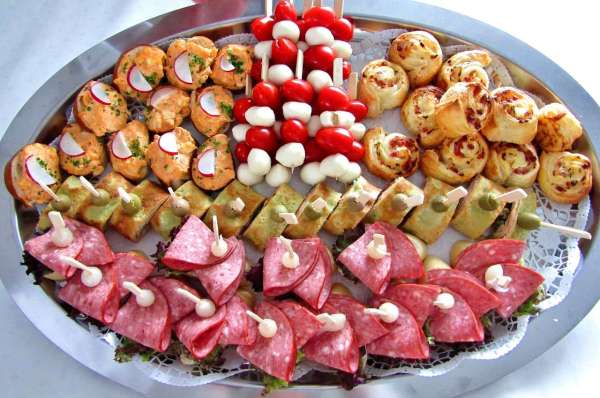
How Many Finger Foods Should You Allow Per Person?
For small savory finger foods, use these figures as starting estimates rather than exact promises.
| Type of gathering | Starting quantity per adult |
|---|---|
| Appetizers before a main meal | About 4 small pieces |
| Two-hour gathering between meals | About 6 to 8 small pieces |
| Evening gathering where finger food replaces dinner | About 10 to 12 pieces, including filling options |
| Dessert after savory food | 1 regular dessert serving or 2 small sweet bites |
The size of the food makes a difference. A tiny cheese puff and a generously filled slider might both count as one piece, but they won’t satisfy the same appetite.
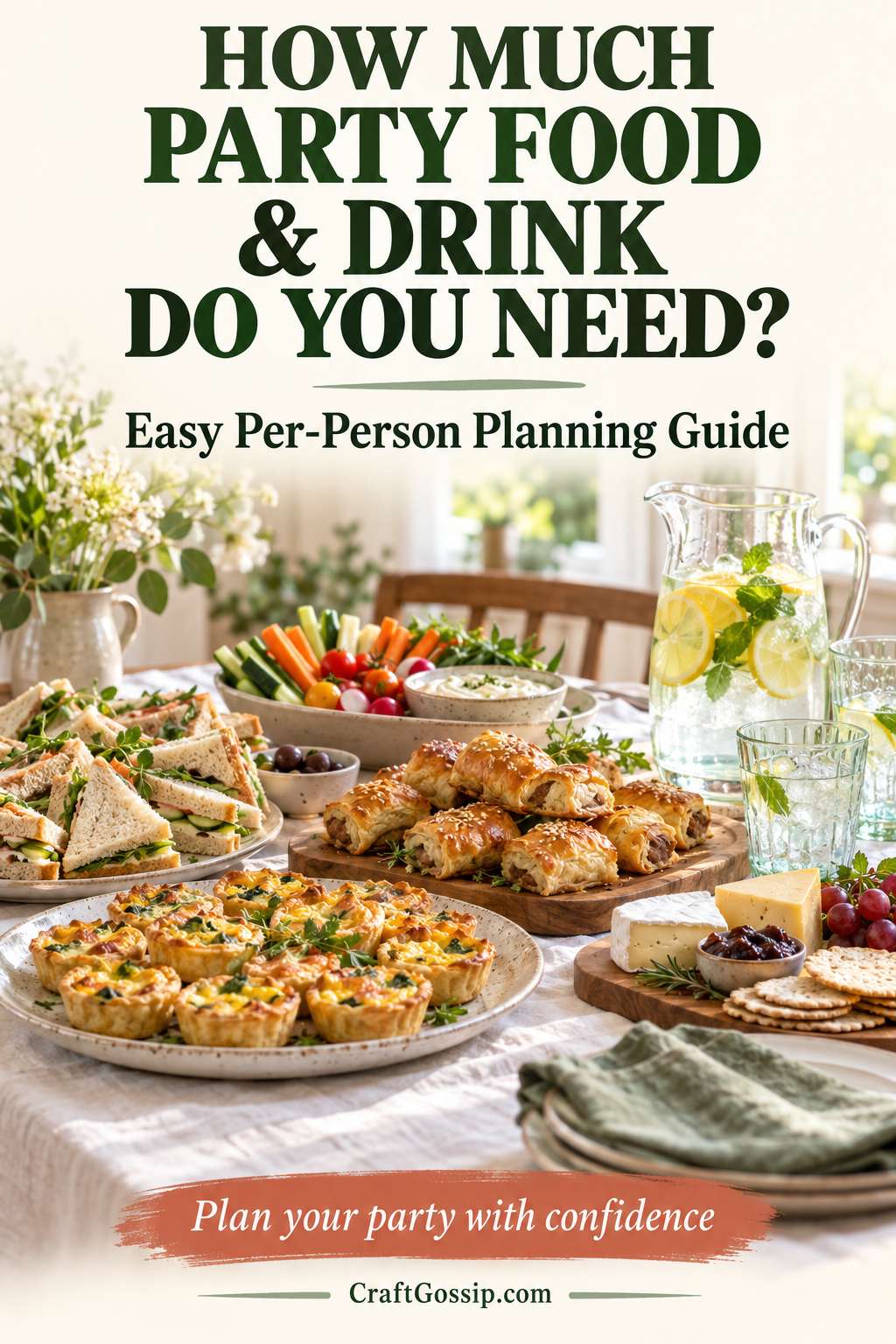
For a meal-style finger-food party, include substantial options such as mini sandwiches, sliders, chicken skewers, vegetable pastries or mini quiches. If the event runs for several hours and your bites are particularly small, increase the quantity or add a more filling dish.
These quantities are totals across the menu, not quantities for every recipe.
If you’re planning eight pieces per person and serving four equally popular savory foods, start with roughly two of each per guest.
For easy pastry ideas, our festive recipes using canned crescent roll dough include options you can adapt to your party theme.
A Simple Party Food Calculation
Use this straightforward calculation:
Number of guests × planned pieces per guest = total finger-food pieces
For example:
20 adults × 8 pieces each = 160 savory pieces
You could divide that into:
- 40 mini quiches
- 40 small sausage rolls
- 40 sandwich quarters
- 40 vegetable pastry bites
That is a starting menu for a short gathering between meals. If those same guests are arriving hungry at dinner time, increase the food and include more substantial choices.
For a modest backup, round up to a sensible pack or batch size. An unopened box of crackers or some freezer-friendly pastries is more useful than another enormous platter you feel obliged to put out.
How Much Food Do You Need for a Buffet?
A buffet is easier to plan when you think in meal portions rather than individual bites.
Allow each adult a main-course portion, accompanying sides and dessert. If you offer several main dishes, divide the expected servings between them.
For example, if 20 guests can choose between chicken and lasagne, you don’t automatically need 20 full servings of each. Plan a combination that feeds the group, with a little flexibility for the more popular dish.
For sides, approximately one cup of salad and 120 to 130 g of prepared vegetables per adult can be a useful starting point for a meal with both. Adjust when you also serve filling sides such as potatoes, rice or pasta.
Check recipe yields carefully. A casserole that serves six as a main meal might stretch further on a buffet with other substantial dishes, but a recipe’s “serves six” is still more useful than guessing from the size of the baking dish.
If you’re organising a shared brunch, our brunch potluck ideas can help you choose a mix of sweet and savory dishes. Assign contributions so you don’t end up with six cakes and nothing resembling lunch.
How Much Cheese, Dip and Crackers Should You Buy?
A grazing board can be a small appetizer or the main attraction, so decide its role before shopping.
If you’re already serving plenty of finger foods, keep the board modest. Choose a few cheeses, one or two dips, crackers and fresh accompaniments.
When grazing food replaces a meal, it needs more substance. Add filled bread, substantial savory bites or another satisfying dish rather than simply increasing the crackers.
A practical way to estimate quantities is to:
- Decide how many people the board needs to serve.
- Check the serving information on dips and cracker packets.
- Divide the cheese selection into realistic portions.
- Account for all the other food on the menu.
- Keep part of the perishable food refrigerated for replenishing.
For presentation inspiration, browse our Valentine’s Day grazing and charcuterie board ideas. You can borrow the arrangement ideas for birthdays, showers and family celebrations by changing the colors and decorations.
A smaller board topped up during the party often works better than a huge display that sits untouched around the edges.
How Much Party Drink Should You Buy?
Plan drinks around your guests’ preferences, the party length and the weather. Include water throughout the event, along with appealing alcohol-free choices.
For an initial shopping estimate for a short gathering, you might budget three to four beverage servings per person across all drink types, then adjust to suit your guests. This is a purchasing estimate, not an alcohol consumption recommendation.
Bottle sizes help turn that estimate into a shopping list:
| Drink container | Approximate servings |
|---|---|
| 2-liter bottle of soft drink or juice | 8 servings of 250 ml |
| 1.25-liter bottle of soft drink | 5 servings of 250 ml |
| 750 ml bottle of wine | 5 pours of 150 ml |
| 750 ml bottle of sparkling wine | 6 pours of 125 ml |
| Individual can or bottle | 1 container |
Wine pours in this table are serving sizes, not necessarily standard drinks. Alcohol strength and pour size affect the number of standard drinks.
For 20 guests, an example shopping estimate of three 250 ml alcohol-free servings each comes to:
20 × 3 × 250 ml = 15 liters
That could be divided between sparkling water, soft drinks, juice and an alcohol-free punch, with drinking water available separately. Change the mix if you’re also serving other beverages, and allow more water for hot weather or a longer event.
If you’re buying alcohol, base quantities on the adults who actually want it and what they prefer. There’s little point buying a case of wine for a group that mostly drinks sparkling water.
Don’t Forget Ice, Cups and Serving Supplies
The food gets all the attention, but a party also needs somewhere to put it.
Add these to your checklist:
- Ice for drinks and separate ice or ice packs for chilling.
- Cups or glasses, including a few spares.
- Plates, napkins and cutlery.
- Serving spoons and tongs.
- Bottle openers and a corkscrew.
- Containers for safely stored leftovers.
- Labels for dishes and relevant allergens.
Check your fridge space before committing to several large platters. A menu that looks easy on paper can become awkward when nothing fits beside the milk.
How to Adjust Quantities for Children and Teenagers
Young children often eat smaller portions, but teenagers may eat as much as adults or more.
For younger children, start with smaller servings and offer seconds. Keep familiar foods available, especially if the adult menu includes strong flavors or elaborate canapés.
Count teenagers as adult eaters when planning a meal. For a hungry group arriving after sport or school, allow extra filling food.
Check allergies with parents beforehand, and choose foods appropriate to the children’s ages.
Easy Ways to Keep Party Food Costs Down
A thoughtful menu can feel generous without becoming expensive.
Choose four or five savory options rather than ten. It makes shopping, preparation and portion planning much easier.
Combine homemade food with supermarket shortcuts. You can make a batch of mini sandwiches, buy ready-made dips and bake frozen pastries without anyone demanding a catering certificate.
Other useful ways to save include:
- Buying seasonal fruit and vegetables.
- Comparing pack prices by weight or piece count.
- Choosing recipes that share ingredients.
- Making one straightforward dessert.
- Keeping spare shelf-stable snacks unopened until needed.
The biggest money-saving habit is counting the whole menu. If you have sandwiches, pastries, cheese, dip and cake, you don’t need a full meal’s worth of every single item.
Keep Party Food Safe While You Serve It
Put perishable food out in smaller batches and replenish it from the fridge. Keep chilled food at 5°C or below and hot food at 60°C or above.
For refrigerated perishable foods allowed to sit between those temperatures, Food Standards Australia New Zealand’s 2-hour/4-hour rule uses the total time spent out of temperature control:
- Less than 2 hours: Eat it or refrigerate it for later.
- Between 2 and 4 hours: Eat it immediately; don’t refrigerate it for later.
- At 4 hours: Discard any remaining food.
Include time spent preparing, transporting and displaying the food. Putting a platter back in the fridge doesn’t reset the clock.
You can read the full 2-hour/4-hour food safety guidance when planning your menu.
Your Quick Party Food Planning Checklist
Before heading to the shops:
- Confirm your guest count.
- Decide whether you’re serving snacks or a meal.
- Choose your menu and check recipe yields.
- Calculate total portions across all dishes.
- Adjust for appetites, dietary needs and party length.
- Plan drinks, water and ice.
- Check storage space and serving supplies.
- Keep a small, practical backup.
You don’t need a table groaning under twenty different dishes to make people feel welcome. Enough satisfying food, something lovely to drink and a host who gets to sit down occasionally will do very nicely.
Write the quantities down before you shop, keep the menu manageable and give yourself permission to buy the dip. There