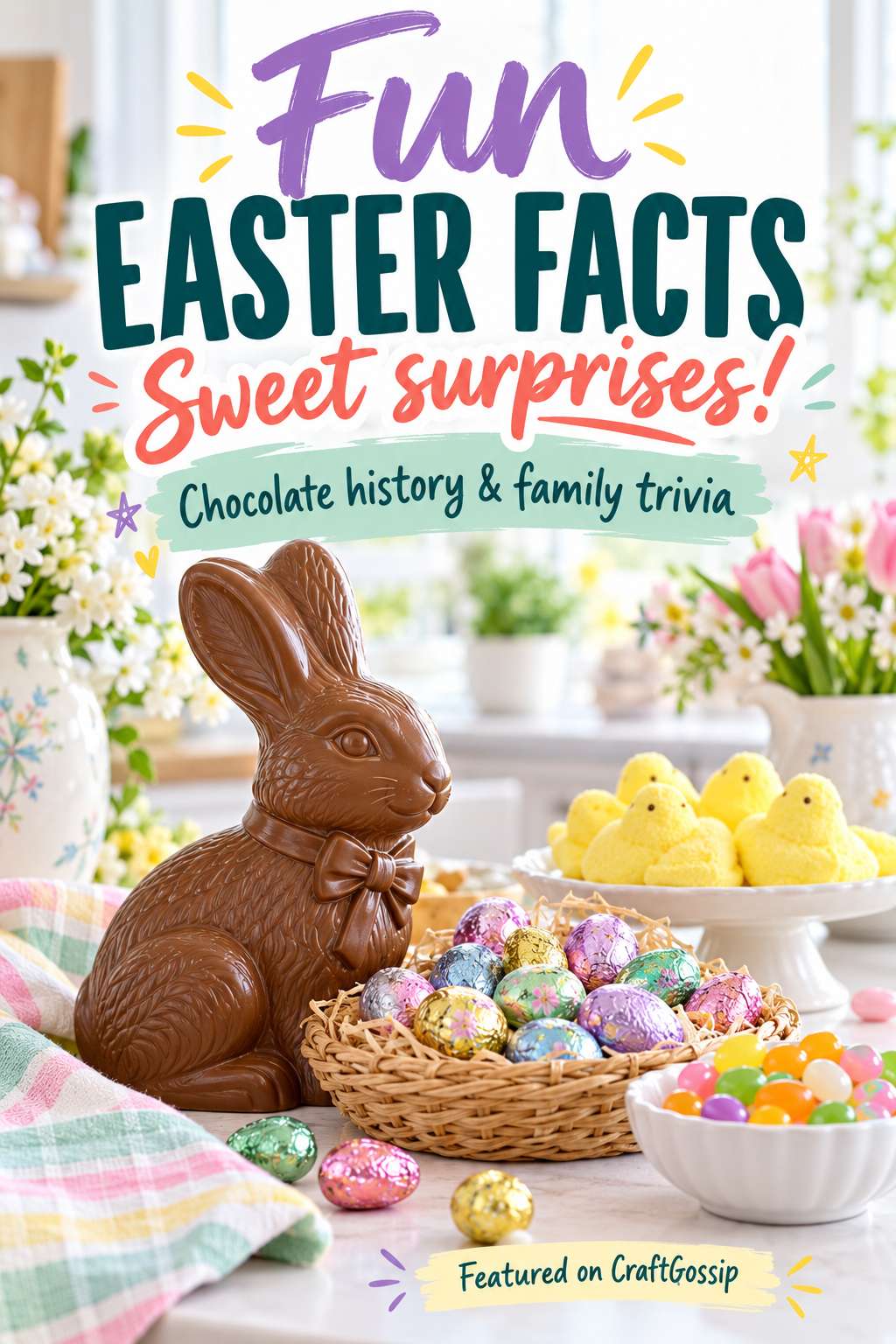
Easter treats come with some surprisingly interesting stories. Behind the foil-wrapped eggs and cheerful marshmallow chicks are chocolate-making milestones, changing production methods and celebrations on an extraordinary scale.
I love little facts you can share while everyone is decorating, filling baskets or sitting around the table. They give children something to wonder about and adults something to chat about—and they can become part of the festivities without much preparation.
Here are five sweet Easter facts, followed by a few ways to use them in your own celebrations.
1. Fry’s Made Chocolate Easter Eggs in Britain in 1873
Bristol Museums records that Fry’s produced the first chocolate Easter eggs in the UK in 1873. That makes them a nineteenth-century confectionery milestone rather than a recent addition to the Easter basket.
It’s a lovely starting point for a conversation about how treats change over time. Ask children to imagine an Easter basket before the familiar supermarket selection of foil-wrapped eggs and chocolate animals.
2. Cadbury’s First Easter Egg Followed in 1875
According to Cadbury’s historical timeline, George and Richard Cadbury introduced the company’s first Easter egg in 1875.
Put the two dates together for an easy trivia question: how many years separated Fry’s first British chocolate Easter eggs and Cadbury’s first Easter egg?
The answer is two—a manageable little calculation for younger participants.
3. Marshmallow Chicks Once Took 27 Hours to Make
Just Born, the company behind PEEPS, says that making a marshmallow chick took 27 hours in 1953. With modern technology, the company says the process now takes six minutes.
That’s an enormous change for such a small treat.
For a family guessing game, offer three possibilities before revealing the historical answer: six minutes, one hour or more than a day. Then talk about how machines can change the way familiar foods are produced.
4. A Recorded Chocolate Easter Egg Weighed 7,200 Kilograms
Guinness World Records lists a chocolate Easter egg made by Tosca in Italy in 2011 weighing 7,200 kilograms. Its circumference at the widest point was 19.6 metres.
That is rather beyond the size of an ordinary Easter basket.
Use a tape measure or a length of string to help children explore what a 19.6-metre circumference means. Keep the activity somewhere spacious, or compare it with measurements around your home.
5. One Easter Egg Hunt Used 501,000 Eggs
Guinness World Records describes an Easter egg hunt held at Cypress Gardens Adventure Park in Florida in 2007 with 501,000 eggs and 9,753 children, accompanied by their parents.
It’s a wonderful number to reveal after asking everyone to guess.
Your own hunt can be much smaller and still feel special. A few thoughtful hiding places, clues suited to the children’s ages and a shared finishing point are enough to create an enjoyable family activity.
Turn the Facts into Easter Table Cards
Write one question on the front of a folded card and its answer inside. Place the cards around the table so guests can take turns reading them aloud.
You could use questions such as:
- In what year did Cadbury introduce its first Easter egg?
- How long did a PEEPS marshmallow chick take to make in 1953?
- How many eggs were used in the Florida hunt described above?
Decorate the cards with pastel paper, stamped eggs or a simple hand-drawn bunny. Large, clear lettering makes them easier for everyone to read.
Add a Trivia Tag to a Homemade Gift
A small fact card can also dress up an Easter gift. Tie one to a treat bag, tuck it beside a handmade decoration or place it in a basket.
For more seasonal inspiration, explore our Easter edible crafts.
You don’t need to turn the afternoon into a formal quiz. Pick a favourite fact, invite a few guesses and let the conversation wander. Sometimes a tiny piece of trivia is all it takes to add another happy detail to a family celebration.