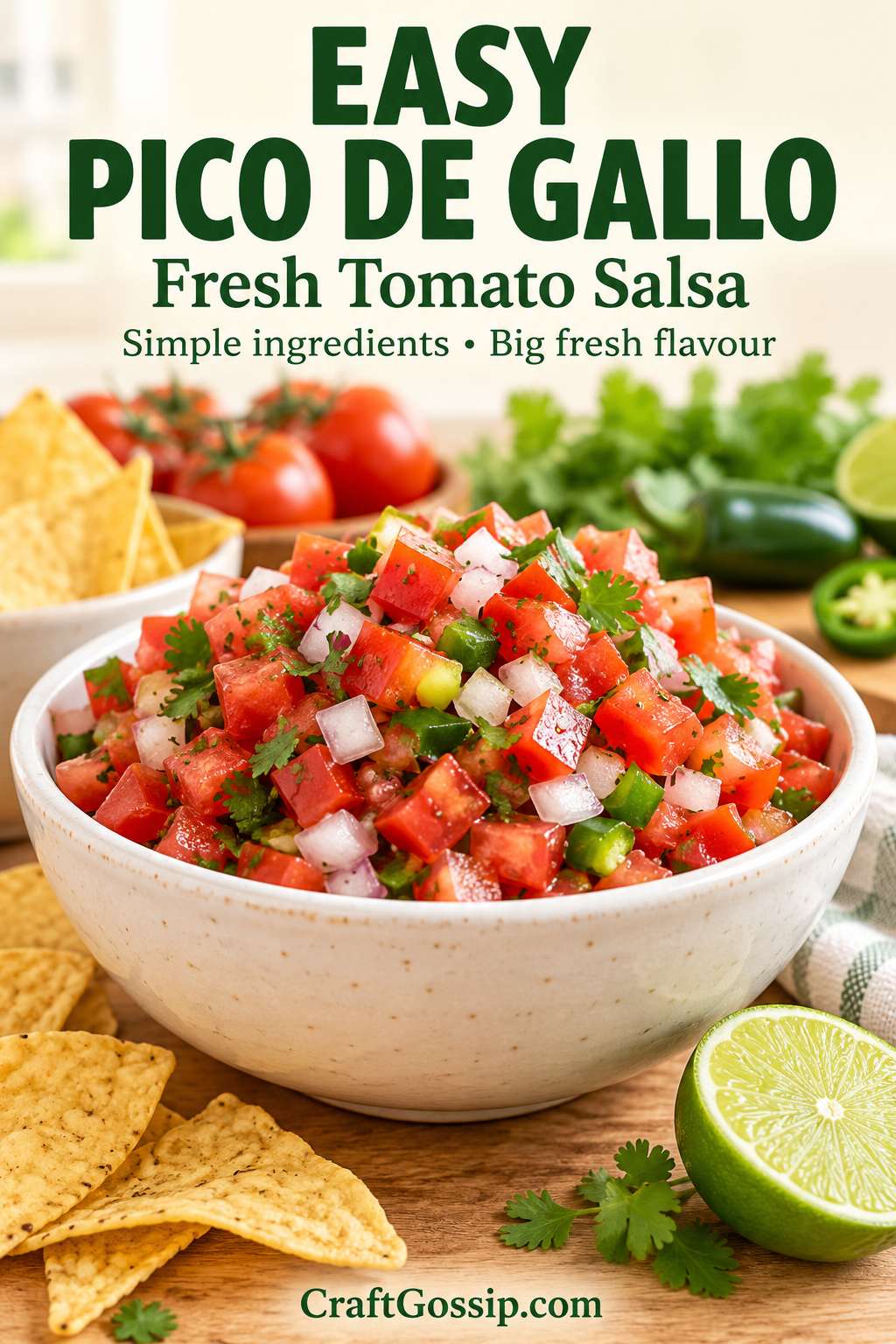
A bowl of fresh pico de gallo can make a very ordinary dinner feel a little more exciting. Tomatoes, onion, coriander, chilli and lime come together into a colourful salsa that is lovely piled onto tacos, spooned over nachos or scooped up with tortilla chips while everyone waits for dinner.
I love this sort of recipe because there is no cooking involved and no complicated equipment to wash afterwards. A knife, a chopping board and a bowl will do nicely. Although, if you start taste-testing with chips, you might want to make a little extra. Quality control can become surprisingly enthusiastic.
The trick to a good homemade pico de gallo is balancing the ingredients and managing the tomato juice. You want a juicy, chunky salsa with plenty of fresh flavour, without a puddle that turns your taco into a soggy balancing act.
This easy recipe includes tips for choosing tomatoes, adjusting the heat and preparing everything ahead.
What Is Pico de Gallo?
Pico de gallo is a fresh, uncooked Mexican salsa made with chopped tomatoes, onion, fresh chilli, coriander and lime juice, seasoned with salt. You may also see it called salsa fresca.
Unlike a smooth or blended salsa, the ingredients remain in little pieces. That chunky texture makes it especially useful as a topping, although a sturdy tortilla chip handles it beautifully too.
For a different salsa to serve alongside it, try our homemade salsa verde. The tomatillo-based green sauce gives you another flavour and texture for a simple taco-night spread.
Easy Homemade Pico de Gallo Recipe
Preparation time: Approximately 15 minutes
Resting time: 10 minutes
Total time: Approximately 25 minutes
Yield: About 3 cups
Serves: 6 as a topping or small side
Ingredients
- 500 g ripe, firm tomatoes, approximately 4 to 6 Roma tomatoes
- ½ cup finely diced white onion, approximately 75 g
- ? cup loosely packed chopped fresh coriander leaves and tender stems, also called cilantro
- 1 fresh jalapeño, finely chopped, starting with half if you prefer mild salsa
- 2 tablespoons fresh lime juice, plus more to taste
- ½ teaspoon fine salt, plus more to taste
Equipment: Chopping board, sharp knife, mixing bowl and spoon.
Instructions
- Prepare the tomatoes. Wash and dry the tomatoes, then remove their cores. Cut into quarters. If the centres contain lots of loose liquid and seeds, gently scoop out some of the watery pulp. There is no need to remove every seed.
- Dice into small pieces. Chop the tomatoes into roughly 5 mm pieces. Aim for pieces small enough to sit comfortably on a chip, but large enough to retain their texture.
- Prepare the onion and chilli. Finely dice the onion. For milder salsa, remove the jalapeño’s white inner ribs and attached seeds before chopping. Wash your hands thoroughly after handling chilli and avoid touching your eyes.
- Combine the ingredients. Put the tomatoes, onion, coriander and chopped jalapeño into a bowl. Add the lime juice and salt, then gently stir.
- Let it rest. Cover and refrigerate for about 10 minutes while the flavours mingle.
- Taste and adjust. Add a little more lime, salt or chilli if needed. If you are serving it with salted tortilla chips, taste the salsa with a chip before adding extra salt.
- Serve. Stir gently and use a slotted spoon if you want to leave excess juice behind, especially when topping tacos or nachos.
Which Tomatoes Are Best for Pico de Gallo?
Roma or plum tomatoes are a useful choice because they generally have firm flesh and less watery pulp than large slicing tomatoes.
However, flavour matters more than the variety. A ripe, tasty slicing tomato is a better choice than a pale Roma tomato that tastes of very little.
Look for tomatoes that are:
- Fully coloured and fragrant
- Firm enough to dice neatly
- Ripe, without mushy patches
Cherry tomatoes work too. Cut them into small pieces rather than leaving them halved, so every spoonful includes a balanced mix of ingredients.
Canned tomatoes are better saved for cooked or blended salsa. They cannot give this recipe the same crisp, fresh texture.
How to Keep Pico de Gallo from Getting Watery
Some tomato juice is normal. Pico de gallo is supposed to be fresh and juicy, so you do not need to dry it out completely.
These small adjustments help prevent excess liquid.
Remove only the loose, watery pulp
Scoop out the wettest centres when necessary, keeping the firm tomato flesh. With fleshy Roma tomatoes, you may need to remove very little.
Use a sharp knife
A sharp knife slices through the tomato skin cleanly. A blunt knife tends to squash the tomatoes and release extra juice before they reach the bowl.
Season close to serving
Salt encourages tomatoes to release liquid. A short rest improves flavour, but a fully seasoned bowl will become juicier as it sits.
For advance preparation, keep the chopped ingredients refrigerated and add the salt and lime shortly before serving.
Spoon the salsa onto hot food at the end
Add pico de gallo after your nachos or other hot dishes finish cooking. Baking it along with the meal softens the tomatoes and loses that lovely fresh contrast.
It would make a colourful finishing touch for these spicy black bean nachos.
Getting the Flavour Balance Right
Tomatoes, limes and chillies vary, which is why tasting matters more than following the seasoning measurements blindly.
If it tastes bland: Add a small pinch of salt, stir and taste again. If it still needs brightness, add a teaspoon of lime juice.
If it tastes too sharp: Add more diced ripe tomato. Extra lime will only make it sharper.
If the onion dominates: Add more tomato, or use less onion next time. For particularly pungent onion, rinse the diced pieces briefly under cold water and drain thoroughly before adding them.
If it is too spicy: Increase the tomato, onion and coriander in proportion. Serve with cooling accompaniments such as avocado or sour cream.
If it is too wet: Drain a little liquid just before serving. You do not need to squeeze or press the salsa.
How to Make Mild Pico de Gallo
Jalapeños can vary considerably in heat, even when they look almost identical.
For a milder version, start with half a jalapeño and remove the white inner ribs and attached seeds. Much of the heat is concentrated in the pale tissue inside the chilli.
For a completely chilli-free bowl, leave the jalapeño out. A little finely diced green capsicum, or bell pepper, can add crunch, although the flavour will be different.
If you are feeding a mixed crowd, keep the main bowl mild and offer extra chopped chilli separately. There is usually someone who wants dinner to be a personal endurance test.
What to Serve with Pico de Gallo
Fresh tomato salsa works with far more than a bowl of chips.
Try it with:
- Beef, chicken, bean or fish tacos
- Burritos and rice bowls
- Quesadillas
- Nachos, added after baking
- Grilled chicken or fish
- Scrambled eggs or omelettes
- Baked potatoes with beans and sour cream
- Avocado toast
For a breakfast that needs a little extra colour, spoon some over eggs and browse our out-of-the-ordinary breakfast ideas for more inspiration.
For parties, serve the salsa in a small bowl and replenish it from the fridge rather than putting the entire batch out at once.
Can You Make Pico de Gallo Ahead?
Yes, although it has its best texture on the day it is made.
To prepare it the day before:
- Chop the tomatoes, onion and chilli.
- Store them in covered containers in the fridge, ideally keeping the tomatoes separate.
- Add freshly chopped coriander, lime juice and salt shortly before serving.
- Let the assembled salsa rest for 10 minutes, then taste and adjust.
If you have already mixed everything together, refrigerate it promptly. Stir and drain excess liquid before serving.
How to Store Leftover Pico de Gallo
Keep leftovers in a sealed container in the fridge and aim to use them within 2 to 3 days. The tomatoes will soften and release more liquid, so the salsa is best enjoyed sooner.
Keep it chilled until needed. Do not leave it sitting out for more than two hours, or more than one hour in temperatures above 32°C.
Freezing is not ideal if you want fresh salsa because thawed tomatoes lose their firm texture. If you freeze leftovers, use them later in a cooked dish rather than expecting the same crunchy topping.
Easy Pico de Gallo Variations
Once you have the basic mixture balanced, a few additions can give it a different personality.
Avocado: Fold in one diced avocado immediately before serving.
Mango: Add ½ cup finely diced ripe mango for a sweet contrast to the chilli and lime.
Cucumber: Stir in ½ cup finely diced cucumber. Remove a very watery seed centre first.
Extra heat: Use more jalapeño or substitute a small amount of serrano chilli, adding gradually.
These are variations on the classic tomato mixture, so start with a modest amount of your extra ingredient and taste as you go.
Frequently Asked Questions
Is coriander the same as cilantro?
Yes. In this recipe, both names refer to the fresh herb. Ground coriander seed is a different ingredient and will not provide the same flavour.
Can I make pico de gallo without coriander?
Yes. Leave it out if you dislike it. Parsley can add a little herbal freshness, but it changes the flavour rather than replacing coriander exactly.
Can I use red onion?
Absolutely. White onion is a common choice, but finely diced red onion works well and adds extra colour.
Can I use lemon instead of lime?
Fresh lime gives the characteristic flavour, but lemon can work when that is what you have. Start with a little less and adjust to taste.
Does pico de gallo need garlic?
It does not need garlic for this simple version. If you enjoy raw garlic, try a small amount of finely grated garlic rather than adding a whole clove straight away.
Can I use a food processor?
A knife gives you better control over the texture. A food processor can quickly turn the tomatoes into a wet, uneven mixture. If you use one for the onion or chilli, chop the tomatoes separately by hand.
There is something lovely about a recipe that makes dinner brighter with a few fresh ingredients and a little chopping. Keep the tomatoes tasty, the pieces small and the seasoning balanced, and you have a homemade salsa worth making whenever taco night rolls around.
Just put a few chips aside for yourself before the bowl reaches the table.





Leave a Reply